Epoxy floors for Des Moines garages that spend winter full of salt
Flake systems for the western suburbs, basement coatings where the water table argues, and metallic floors when the room is actually living space. Free estimate from a photo.
Flake systems for the western suburbs, basement coatings where the water table argues, and metallic floors when the room is actually living space. Free estimate from a photo.
A Des Moines garage is a staging area for snow, calcium chloride, and the meltwater that follows every commute on I-235 or Highway 141. Bare concrete drinks that brine, then dusts all summer. A coating only works if the slab is ground open, the salt crust is gone, and the top coat is hard enough that a warm tire in July does not print itself into a film that was rushed in April.
Basements are the other local job. Spring raises humidity, and plenty of older houses in Beaverdale, the south side, and Urbandale have slabs that were poured when drainage was an afterthought. We look for active moisture before anyone talks about a metallic living-room floor. New slabs in Waukee and Ankeny have the opposite issue: they are still curing, and coating them too early is how a pretty floor blisters.
This is a service-area crew. There is no showroom address to visit. Send the city, a photo, and the rough size.
The usual Des Moines request is a two- or three-car garage that has gone chalky. A full flake broadcast hides the tire tracks and the salt stains and gives wet boots something to grip. Solid color is an option when the garage is more show than snow-storage.
Central Iowa basements earn their keep as family rooms. We test for moisture, fill the cracks a freeze opened, and only then talk about a bright solid color or a metallic. A wet slab does not get a cosmetic coating and a hope.
Metallic floors show up in finished basements and the occasional main-level room in West Des Moines and Clive, where the space is heated and the slab is stable. They are a design coat, not the right first choice for an unheated stall that parks a plow truck.
Acreage shops in Johnston, Indianola, and the edge of Grimes take weld spatter, oil, and a tractor. Those floors want a tougher build than a guest-room basement, and they are often unheated, so the calendar matters.
Small retail and office suites along the west mix and in Ankeny need a floor that mops clean and can take a midnight restock. We can mark walk paths. We do not invent a health-department license number.
Decorative coatings on covered porches are possible. Open slabs that see Iowa freeze-thaw and de-icer are a different conversation, and sometimes the honest answer is not to coat them.
Once the concrete is sealed, winter brine sits where you can rinse it instead of disappearing into the paste and spalling the top by March.
Bare Iowa slabs chalk. A sealed floor sweeps. That matters in a garage that shares air with a basement family room.
A gloss floor bounces what little winter daylight a basement gets. Many people notice the room before they notice the coating.
Buyers in this metro look at garages. A documented coating with a cure history is easier to talk about than a peeling paint kit from a big-box store.
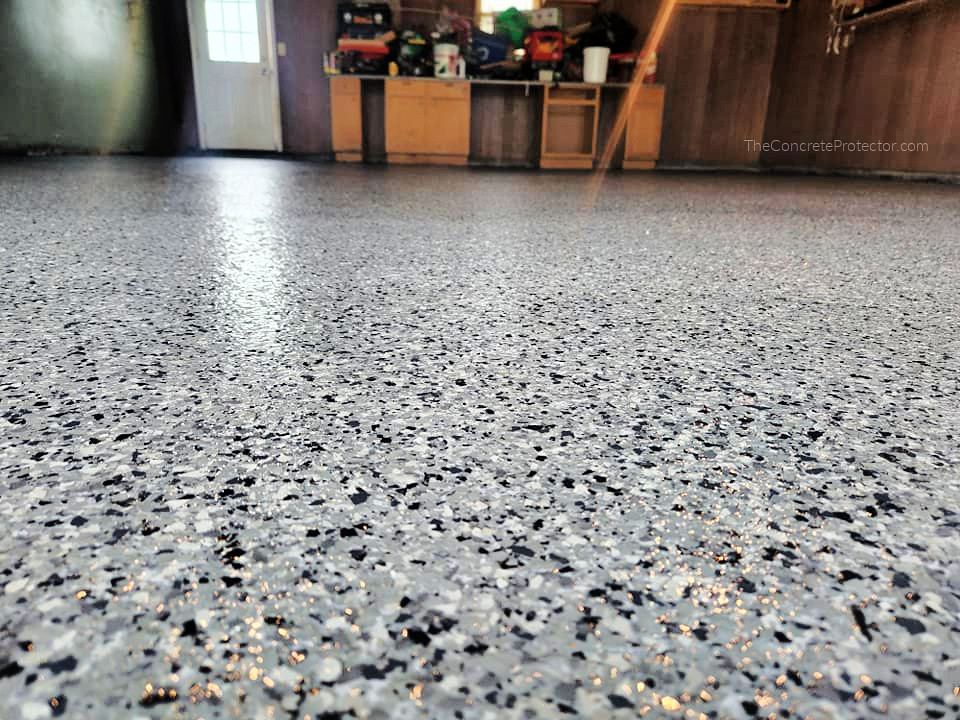
Flake, metallic, and solid-color floors all start with the same grind. The photos are examples of those looks, taken elsewhere. They are not claimed as Des Moines jobs.
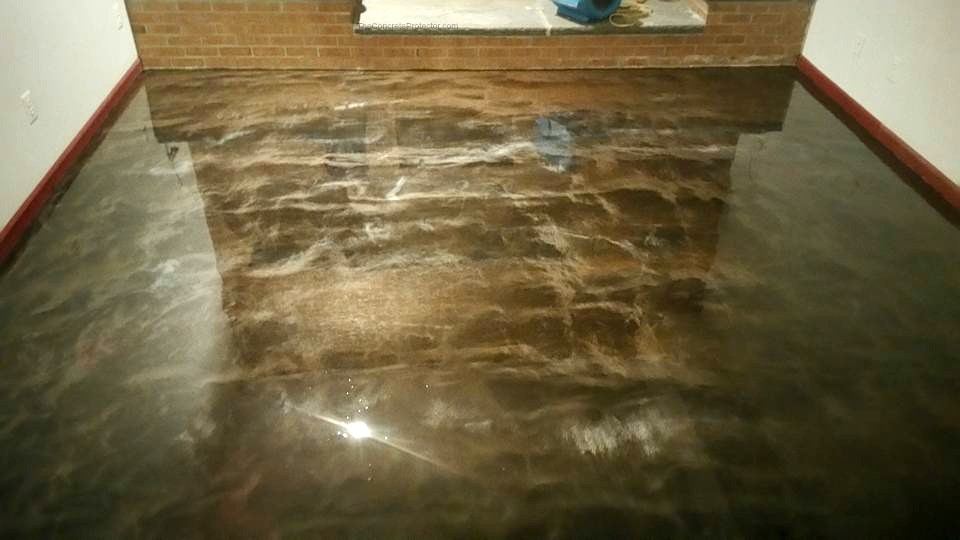
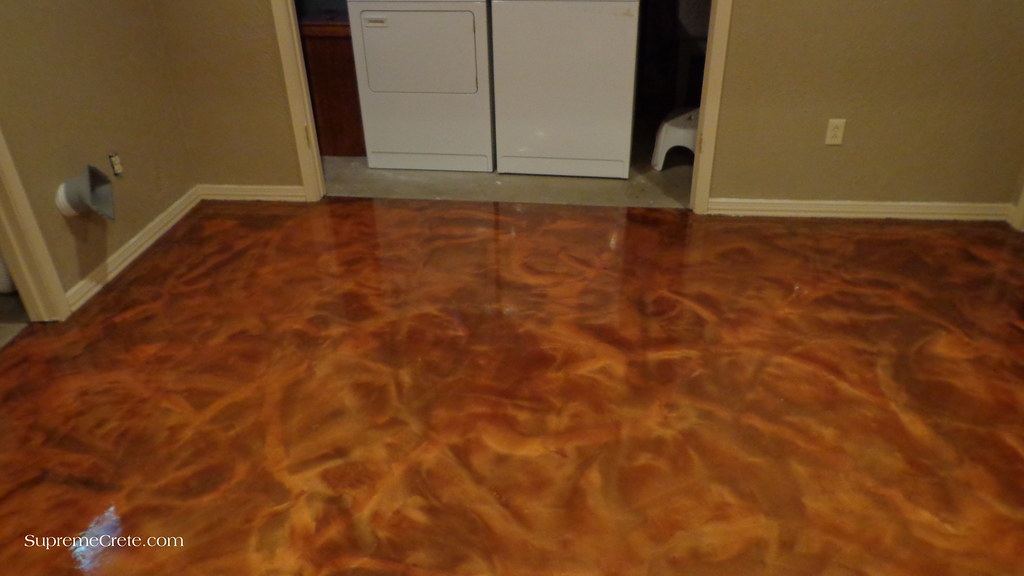
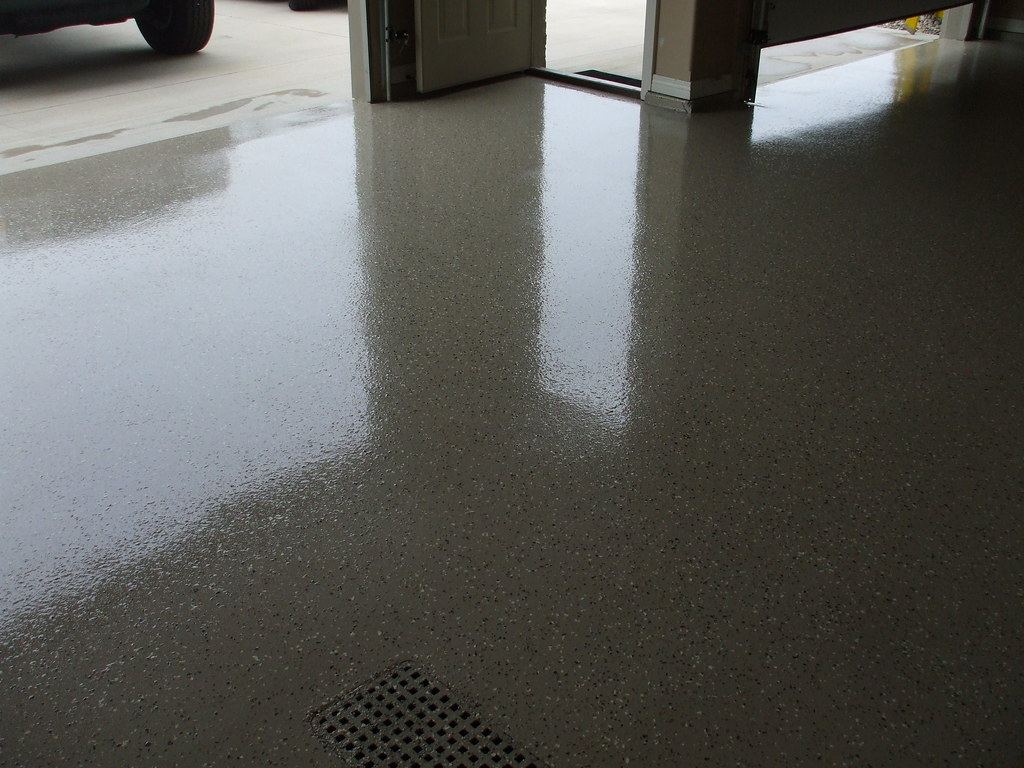
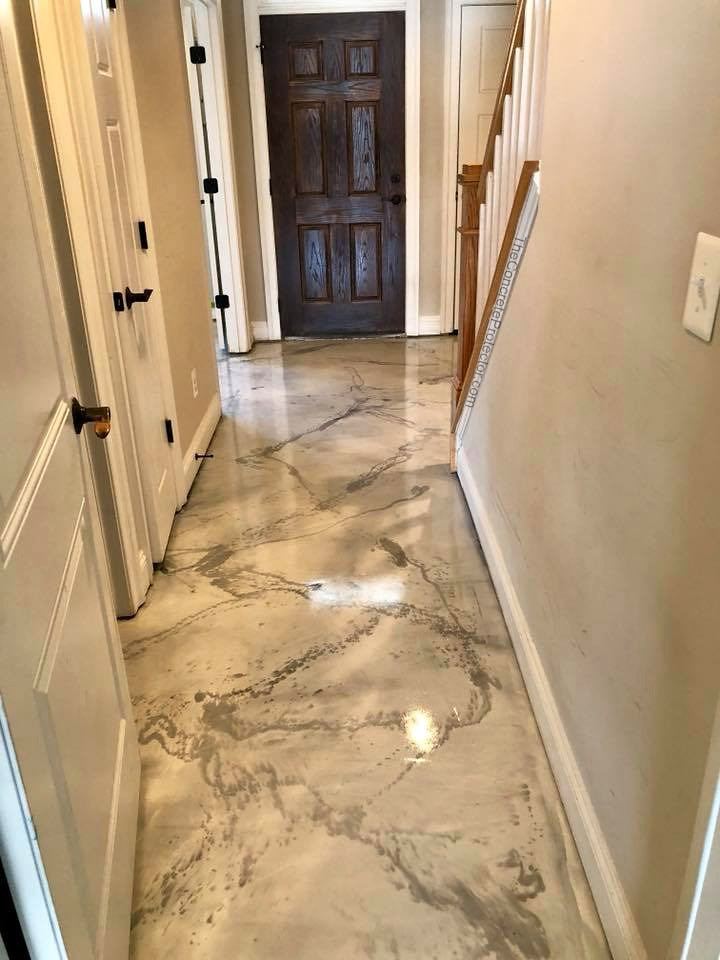
These photos are examples of flake, metallic, and solid systems. They are not claimed as jobs in Des Moines. Color is chosen for your slab.
Full-broadcast flake is the default for Des Moines garages because it hides meltwater stains and adds texture when boots are wet. Partial flake looks dressier and shows tire marks sooner.
A solid gray or tan reads clean in a shop or a basement that will get rugs and furniture. It shows dust more than flake, which some people want and some do not.
Metallic pigment is worked by hand. It belongs in heated space with a stable slab. An unheated January garage is a poor place to chase a marble pattern.
Sweep grit so it does not act like sandpaper, wipe salt when you see it, and keep jack stands and plow blades on pads. A coating is tough. It is not armor against a dragged snowblower.
The same product line does not land the same way on a new Waukee slab and a 1960s Urbandale garage. Each town page says what we actually run into there.
Only if the slab is warm enough to cure. Heated garages and basements can be winter work. Unheated stalls usually wait.
Salt is why the prep and the top coat matter. Rinse it when you can. A coating is there so the salt is not soaking into bare concrete.
Foot traffic is often about a day. Vehicles wait several days. The exact window is in your quote, because January and July do not cure the same.
No. Crews come to the slab. Send the city with the estimate form.
No. They are freely licensed examples of flake, metallic, and bare-concrete floors so you can see the difference. Your floor is quoted from your slab.
Tell us the city, the room, and whether the garage is heated. A photo of the concrete, including cracks and stains, is enough to start a written estimate.